
Tax Saving Strategies for Businesses
Running a small business means wearing a dozen hats, and “tax strategist” is rarely the one anyone signs up for. Yet the weeks leading into a filing deadline are exactly when the decisions you make — or fail to make — have the biggest financial impact on your business for the entire year. And this year, two major deadlines are converging almost on top of each other for businesses with ties to both the UAE and India.
In the UAE, companies with a financial year ending 31 December 2025 must file their corporate tax return and pay any tax due by 30 September 2026. For a large share of UAE businesses, this is only their first or second corporate tax filing ever, since the tax was introduced relatively recently — which means there’s little institutional memory of “how we did it last time” to lean on. Meanwhile, in India, the income tax return deadline for non-audit taxpayers falls on 15 September 2026 — the very same day as the second advance tax installment for the 2026-27 financial year — with audited returns due by 31 October 2026.
If your business operates in one of these markets, or has financial links to both, the next several weeks are the highest-leverage window of the year to get your tax position right. This article walks through five concrete strategies you can act on now, why each one matters, and the most common mistakes that quietly cost small businesses money every filing season.
Why Tax Planning in September Is Different From Tax Planning in January
There’s a common misconception that “tax season” is something that happens to you — a fixed date arrives, you gather your documents, and you file. In practice, the businesses that pay the least (legally) and face the fewest penalties are the ones that treat the weeks before a deadline as an active planning window, not a paperwork exercise.
Here’s why the distinction matters. Many of the decisions that actually reduce your tax liability — electing for a relief, timing a deductible expense, correcting a bookkeeping error before it compounds — have to happen before the return is filed, not after. Once you’ve submitted your return, your options narrow considerably: an amendment is possible, but it’s slower, sometimes more expensive, and in some cases draws more scrutiny than getting it right the first time. The five strategies below are all things you can still act on today, which is exactly why the timing of this article matters as much as its content.
1. Claim Small Business Relief Before It’s Gone
If your UAE business has revenue of AED 3 million or less, you may be eligible to elect for Small Business Relief, which allows qualifying businesses to be treated as having no taxable income for the relevant period — effectively a 0% corporate tax outcome. This isn’t automatic. It requires an active election, and it isn’t available indefinitely: the relief currently applies to tax periods ending on or before 31 December 2026. From 2027 onward, businesses that previously relied on it move to the standard treatment, meaning income above AED 375,000 becomes taxable in the ordinary way.
This creates a narrow but real planning window. If your business qualifies and you haven’t yet checked whether the election has been made correctly, this is the year to resolve it — not next year, when the option may no longer exist for your business at all. A few things worth verifying:
- Revenue threshold accuracy. The AED 3 million figure is based on actual revenue for the relevant tax period, not net profit — a business can have thin margins and still exceed the threshold, or have healthy margins and comfortably qualify.
- The election is a choice, not a default. Simply having revenue under the threshold doesn’t automatically apply the relief — it has to be elected as part of your return.
- Some business structures and activities may not be eligible, regardless of revenue. This is worth confirming with an advisor rather than assuming eligibility based on revenue alone.
If you have financial ties to India as well, a related principle applies there under the presumptive taxation provisions available to certain small businesses and professionals. These schemes don’t offer a 0% outcome the way UAE Small Business Relief does, but they do significantly simplify the compliance burden by allowing eligible taxpayers to declare income as a fixed percentage of turnover, reducing the detailed expense documentation that would otherwise be required. Both reliefs share the same underlying lesson: they exist to reward businesses that actively plan for them, not businesses that discover them by accident after the fact.
2. Time Your Deductible Expenses Correctly
Every business owner knows that legitimate expenses reduce taxable income. Fewer are aware of how easily a deduction can be lost — not because the expense wasn’t legitimate, but because of when it was recorded relative to the end of the financial year.
A recurring mistake looks like this: an expense is accrued in the books — meaning it’s recorded as owed — but the actual payment isn’t settled until well into the following financial period. Depending on the specific rules that apply to your business and jurisdiction, this timing gap can affect whether the deduction is available in the period you expected, or pushed into a later one. For a business trying to manage its tax position deliberately, that’s the difference between a deduction that helps this year’s filing and one that arrives a year later than planned.
Before your financial year closes, it’s worth running through a short review:
- Outstanding invoices you’re able to settle before year-end. If a payment is genuinely due and you have the cash flow to clear it, doing so before the period closes can matter more than it might seem.
- Equipment, software, subscriptions, or professional service costs that are properly attributable to this period rather than the next.
- Payments to vendors, contractors, or service providers that need to be finalized — not just invoiced — to secure the deduction as intended.
- Prepaid expenses, which sometimes need to be apportioned across periods rather than deducted in full upfront, depending on the nature of the cost.
None of this requires sophisticated tax engineering. It requires someone actually looking at the books before the deadline, rather than after — which is precisely the step many small businesses skip simply because nobody owns that task explicitly.
3. Reconcile Your VAT and Corporate Tax Records Together
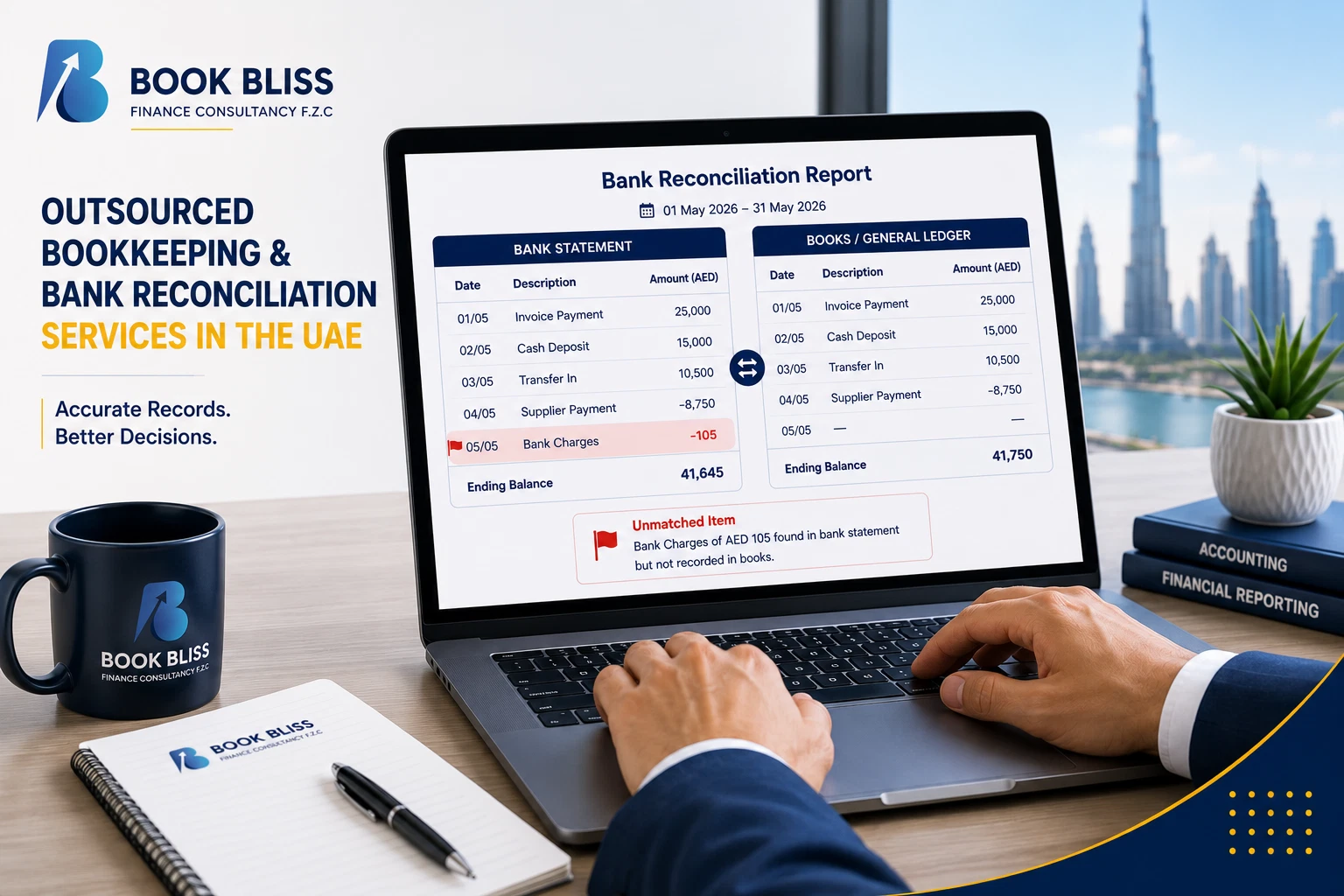
For UAE businesses, VAT and corporate tax aren’t separate universes — they’re two different views of the same underlying financial activity, and the Federal Tax Authority can and does compare them. When the revenue and expense figures reported in your VAT returns over the year don’t line up with what your corporate tax return is about to show, it’s one of the most common triggers for closer scrutiny, even when the mismatch is a genuine bookkeeping inconsistency rather than anything deliberate.
This is a step many businesses skip simply because VAT and corporate tax are often handled at different times of the year, sometimes by different people, without ever being placed side by side. Before filing, it’s worth walking through a basic reconciliation:
- Compare total reported revenue across your VAT filings for the year against what your corporate tax return is set to declare. Genuine differences can exist — not all revenue is VAT-applicable, and not all VAT-applicable supplies map directly onto taxable income — but you should be able to explain every difference, not just notice it exists.
- Check that exempt or zero-rated supplies are consistently classified across both filings. A supply treated one way on a VAT return and a different way on the corporate tax return is a red flag even if both treatments have a legitimate underlying explanation.
- Confirm that input VAT reclaims align with the expenses being deducted for corporate tax purposes. If you’ve reclaimed VAT on a cost, that cost should generally also appear as a deductible business expense — a mismatch here is often the first thing a reviewer will notice.
Catching a discrepancy yourself, before submission, costs you an afternoon of reconciliation work. Having the FTA catch it after filing costs considerably more — in time, in potential penalties, and in the ongoing scrutiny that follows a flagged return into future years.
4. Don’t Let Registration or Filing Deadlines Slip
It’s tempting to treat a filing deadline as a single date with a single consequence for missing it. In practice, the penalty structure in both the UAE and India is designed to compound the longer a business remains non-compliant, which means a short delay and a long delay are not remotely comparable in cost.
In the UAE, late corporate tax filing carries a fixed penalty for each month or part of a month the filing remains outstanding, with the monthly amount increasing the longer the delay continues — and unpaid tax accrues interest independently on top of that penalty. These run in parallel, not as alternatives to each other, meaning a business that both registered late and files late can accumulate penalties across multiple categories simultaneously, with no single cap limiting the total.
In India, missing the ITR deadline triggers a late filing fee under the applicable provisions, along with interest on any outstanding tax liability calculated from the original due date. Beyond the direct financial cost, a late filing can also restrict your ability to carry forward certain losses into future tax years — a consequence that’s easy to overlook in the moment but can matter significantly to a growing business relying on loss carry-forward to offset future profitability.
The deeper issue is that “the deadline” isn’t actually one date for every business. Your specific filing deadline depends on your financial year-end, your registration date, and in some cases your business structure — meaning a date that applies to one business down the street may not apply to yours at all. If you’re not entirely certain which deadline governs your specific business, treating that uncertainty as a problem to resolve now — rather than an assumption to carry into September — is itself one of the highest-value things you can do this month.
5. Get a Professional Review Before You File, Not After
Of everything on this list, this is the strategy most likely to get skipped, usually for the same reason: it feels like an extra step when the return already feels close to done. In practice, it’s often the single highest-leverage hour a small business spends all year.
The most expensive tax mistakes are rarely caught during filing — they surface afterward, when correcting them costs more time, more money, and in some cases invites more scrutiny than getting the return right the first time would have. A focused review with an accountant or tax advisor before submission typically catches a predictable set of issues:
- Deductions the business is entitled to but hasn’t claimed, often because the underlying documentation wasn’t organized in a way that made the deduction obvious.
- Reliefs or elections the business may be eligible for but hasn’t formally applied, including situations like Small Business Relief in the UAE, where eligibility exists but the election itself was never made.
- Inconsistencies between the day-to-day bookkeeping and the figures about to be submitted on the return — the kind of small discrepancies that are trivial to fix before filing and considerably harder to explain after.
- Structural questions specific to growing businesses — for instance, whether a change in revenue, headcount, or business activity during the year affects eligibility for a relief that applied the previous year but may not apply this year.
This holds true whether it’s your business’s very first corporate tax filing in the UAE or a well-established annual routine of ITR filings in India. A second, experienced set of eyes on the return before it’s submitted is consistently one of the highest-value, lowest-cost steps available to a small business — and it’s the one strategy on this list that doesn’t require you to have any specialist tax knowledge yourself, only the judgment to ask for a review before the deadline rather than after.
A Simple Pre-Filing Checklist
Before either deadline arrives, it’s worth working through a short list rather than relying on memory:
- Confirm your exact filing deadline based on your specific financial year-end and registration date — don’t assume it matches a generic date you’ve seen elsewhere.
- Check your eligibility for Small Business Relief (UAE) or presumptive taxation provisions (India), and confirm the relevant election has actually been made, not just assumed.
- Review outstanding invoices and payments that could be settled before your financial year closes to secure deductions in the correct period.
- Reconcile your VAT and corporate tax figures side by side, and be able to explain any differences rather than simply noticing them.
- Book a pre-filing review with an accountant or tax advisor, ideally with enough lead time that any issues found can still be corrected before submission.
None of these steps require sophisticated planning — they require someone treating the weeks before the deadline as active work, rather than a countdown to a date that eventually just arrives.
The Bottom Line
Tax-saving isn’t something that happens in September — it’s the outcome of decisions made throughout the year finally being reflected correctly on a return. But even with the deadline close, there’s still real, meaningful action available: an election that hasn’t been made yet, an expense that hasn’t been settled yet, a reconciliation that hasn’t been run yet. Every strategy above is something a small business can still act on today, not something that needed to have started months ago.
Book Bliss works with small businesses across the UAE, and with clients managing tax obligations in India as well, to make sure nothing is missed before filing. Whether you’re preparing for your first UAE corporate tax return, your fifteenth ITR filing, or trying to make sense of obligations across both markets at once, a short conversation now is considerably cheaper than a correction later. Get in touch for a free consultation before either deadline arrives.
This article is general information current as of publication and is not a substitute for personalized tax advice. Deadlines, thresholds, and relief eligibility depend on your specific business circumstances — speak with a qualified advisor about your situation before filing.
Frequently Asked Questions
What happens if I miss the UAE corporate tax deadline? Late filing triggers a fixed monthly penalty that increases the longer the delay continues, along with interest accruing separately on any unpaid tax. There’s no general extension available for standard filings, so submitting a few days ahead of the deadline is safer than aiming for the final day.
Do I need to file a UAE corporate tax return even if I expect to owe zero tax? Generally yes. Filing is typically required even where taxable income falls below the threshold, a loss has been recorded for the period, or a relief such as Small Business Relief applies — filing the return and paying any tax due are separate obligations that usually share the same deadline without being conditional on each other.
Is Small Business Relief available to every UAE business under the revenue threshold? Not automatically. Revenue under AED 3 million is a starting point for eligibility, but the relief has to be actively elected, and certain business structures or activities may be excluded regardless of revenue. Confirming eligibility with an advisor is safer than assuming it based on revenue alone.
I have business dealings in both the UAE and India — which deadline should I prioritize? Start with whichever deadline is closer for your specific business, then work backward from there. If you’re unsure which obligations apply to you in each market, that uncertainty is exactly the kind of cross-border question worth resolving with a quick consultation before either deadline passes, not after.
Can I still make changes to reduce my tax liability if my financial year has already closed? Some strategies — like timing expense payments before year-end — do require acting before the period closes. But others, including confirming reliefs, reconciling records, and getting a pre-filing review, remain fully available right up until the return is actually submitted. The point at which your options genuinely narrow is filing, not year-end.