Book Bliss’s Guide on How to Prepare for a Financial Audit in the UAE
For many UAE business owners, the first real question about a financial audit isn’t “how do I prepare” — it’s “do I even need one.” That confusion is understandable, because unlike some jurisdictions where every company is audited every year, the UAE’s audit requirements depend on a specific mix of revenue, entity type, and free zone rules that changed as recently as 2025. Getting that answer right matters just as much as the preparation itself, so this guide starts there before walking through exactly how to get ready once you know an audit applies to you.
Does Your Business Actually Need an Audit?
Under Ministerial Decision No. 84 of 2025 — which replaced the earlier Ministerial Decision No. 82 of 2023 and applies to tax periods starting on or after 1 January 2025 — audited financial statements are mandatory for corporate tax purposes in three specific situations:
Your standalone revenue exceeds AED 50 million. If your business isn’t part of a tax group and your revenue for the tax period crosses this threshold, an audit is required. Worth noting: this threshold isn’t prorated. If your tax period happens to be shorter or longer than a standard 12 months, the AED 50 million figure still applies as-is, not adjusted proportionally.
You’re a Qualifying Free Zone Person (QFZP), regardless of revenue. This is the detail that catches many free zone businesses off guard. Even a small free zone company with modest revenue must maintain audited financial statements if it wants to claim the 0% corporate tax rate on qualifying income. The audit isn’t optional scaling with size here — it’s a direct condition of keeping the preferential tax treatment.
You’re part of a Tax Group. The 2025 update specifically changed this: previously, only tax groups with consolidated revenue above AED 50 million needed audited statements. Under the current rule, all tax groups must prepare audited special purpose aggregated financial statements, regardless of the group’s combined revenue.
Beyond corporate tax specifically, there’s a separate layer worth knowing about: mainland companies are generally required to have their accounts audited under the UAE Commercial Companies Law (Federal Decree-Law No. 32 of 2021), independent of the corporate tax rules entirely. And free zones themselves are self-regulated on this point — established zones like DMCC, DIFC, JAFZA, and Meydan have long required annual audited financial statements simply as a condition of licence renewal, regardless of what corporate tax law requires. So a business can end up needing an audit for licence renewal purposes even if it falls under every corporate tax exemption.
If none of the above applies to you, you’re not required to have an audit for corporate tax purposes — but you’re still required to maintain accurate financial records, and a voluntary audit can still be worthwhile for financing, investor confidence, or simply catching problems early. The rest of this guide applies whether your audit is mandatory or voluntary.
One more detail worth flagging: whoever conducts your audit needs to be a UAE-registered auditor, operating under the standards set by Federal Law No. 12 of 2014 on the Regulation of the Auditing Profession. An audit conducted by someone not properly registered in the UAE won’t satisfy the requirement, regardless of how thorough the work itself is.
Book Bliss provides both external audit services for statutory and corporate tax compliance, and internal audit support for businesses wanting to strengthen controls proactively, even where it isn’t mandatory.”
What a Financial Audit Actually Involves
A financial audit is an independent examination of your business’s financial records, aimed at forming a conclusion about whether your financial statements have been prepared correctly and fairly represent your financial position. It’s not simply a check that every number is technically correct — auditors gather evidence to support a broader conclusion about the reliability of your financial reporting as a whole.
This distinction matters for how you should think about preparation. The goal isn’t to make your numbers “look good” before the auditor arrives — it’s to make sure your underlying records genuinely and accurately reflect your business, and that you can explain and support everything in them. An audit built around presentation rather than substance tends to fall apart quickly once real questions start. Clean, audit-ready financial statements start with reliable financial reporting throughout the year, not just at year-end.
Why Preparation Matters More Than Most Businesses Expect
Walking into an audit with disorganized records doesn’t just slow things down — it actively costs money and time in specific, predictable ways: repeated requests for the same documents, unexplained discrepancies that take days to resolve, accounting staff pulled away from their normal work to hunt for old invoices, and audits that run well past their expected timeline because every question turns into a scavenger hunt.
The upside of real preparation goes beyond just avoiding those headaches. Working through your records properly before an auditor arrives often surfaces problems on your own terms — an old receivable nobody’s reviewed in years, a bank reconciliation with unexplained gaps, an expense booked in the wrong period. Finding these yourself, ahead of time, gives you room to investigate and correct them properly. Having the auditor find them first puts you in a reactive position, answering questions about issues you didn’t know existed.
The Audit Preparation Checklist
1. Finalize Your Accounting Records First
Before anything else, make sure your books actually contain everything relevant to the period being audited — all revenue, expenses, payroll entries, and other financial activity properly recorded, not sitting in a “to be entered later” pile. Confirm bank transactions have all been entered, sales and purchases are properly recorded, necessary journal entries and accruals have been posted, and the accounting period has been properly closed. This is the foundation everything else depends on — reconciling and reviewing incomplete records just means redoing the work later.
2. Reconcile Every Balance Sheet Account
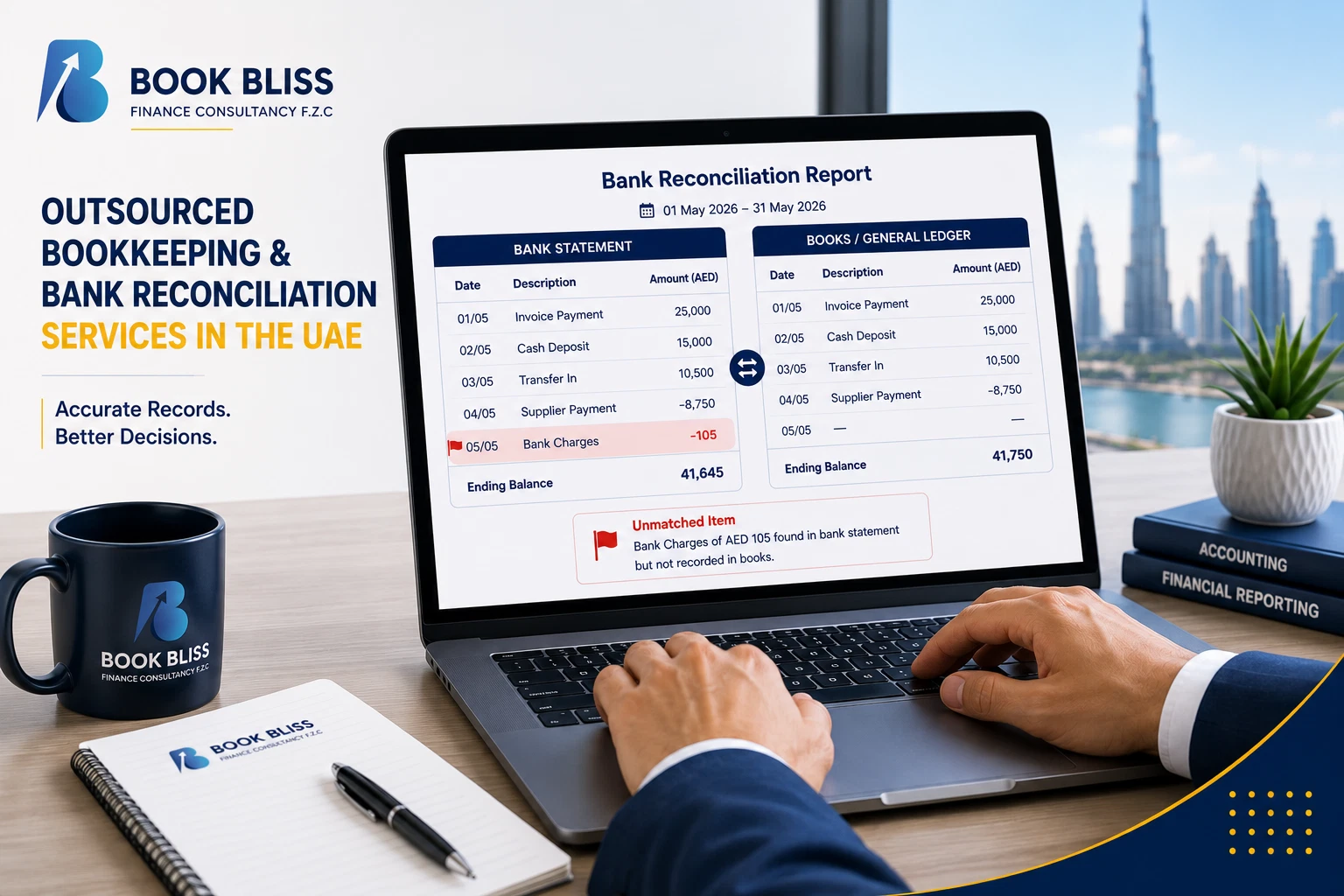
Reconciliation means comparing what your accounting system shows against an independent source — your bank statement, a supplier statement, a loan schedule. Do this for bank accounts, credit cards, accounts receivable, accounts payable, loans, payroll-related balances, VAT and corporate tax balances, fixed assets, and inventory. When a reconciliation surfaces a difference, investigate the cause rather than simply adjusting the number to match — reconciliation differences often reveal duplicate entries, missing transactions, timing issues, or unrecorded bank charges, and understanding why matters more than making the numbers align.
3. Review Your Financial Statements With Real Scrutiny
Once records are reconciled, look at your balance sheet, income statement, and cash flow statement, not just to check that the totals look reasonable, but to genuinely question them. Has revenue moved significantly from the prior period? Have expenses jumped unexpectedly? Are receivables unusually high? None of these automatically indicate an error — but they should be understood and explainable, because an auditor will ask about exactly this kind of movement, and “I’m not sure” is a worse answer to have ready than a real explanation.
4. Organize Your Supporting Documentation by Category
Scrambling to locate a specific invoice or contract mid-audit is one of the most common, entirely avoidable sources of delay. Build a structured system — digital, physical, or both — organized by accounting area: cash and bank (statements, reconciliations), revenue (invoices, contracts, credit notes), expenses (supplier invoices, receipts, payment records), fixed assets (purchase documentation, depreciation schedules), and loans (agreements, repayment schedules). When an auditor requests something, your team should know immediately where to find it, not need to search.
5. Review Accounts Receivable Carefully
Outstanding customer balances affect both your balance sheet and how collectible your revenue actually is in practice. Review your receivables aging specifically for long-outstanding balances, disputed invoices, and unusual movements. Be ready to explain significant outstanding amounts — and if there’s genuine concern about collectability, that should be properly assessed and documented under the applicable accounting standard, not quietly adjusted to make the balance look healthier than it is.
6. Review Accounts Payable, Especially Around Year-End
Confirm that all relevant supplier liabilities have actually been recorded in the correct period — this is particularly easy to get wrong right around a financial year-end, where an invoice or liability from one period sometimes accidentally lands in the next. Review supplier statements, outstanding invoices, and payments made shortly after year-end to catch anything that should have been recorded earlier but wasn’t.
7. Verify Every Bank and Cash Balance
Cash is one of the easier areas to independently verify, since bank statements provide direct, external confirmation. Make sure every bank account is fully reconciled, with outstanding items — deposits in transit, uncleared payments, bank charges — genuinely understood rather than left as a mystery balance. If your business operates multiple bank accounts, confirm every single one has actually been reconciled, not just the primary operating account.
8. Review Fixed Assets and Their Supporting Records
If your business owns equipment, vehicles, property, or other significant assets, review the fixed asset register for accuracy: purchase documentation, acquisition dates, depreciation calculations, and any disposals or transfers during the period. Disposed assets need to be properly reflected in the records — an asset still sitting on the books after it’s been sold or scrapped is a common, easily-caught audit finding.
9. Confirm Loans and Liabilities Are Properly Documented
Gather loan agreements, repayment schedules, and interest calculations, and confirm the balances in your accounting records actually match what your lender’s records show. If there have been new loans, repayments, or refinancing during the period, those transactions may carry specific accounting or disclosure requirements — worth flagging to your accountant early rather than discovering the requirement during the audit itself.
10. Review Revenue and Expenses for Anything Unusual
Be ready to explain how your revenue is actually generated and recorded — significant customer contracts, credit notes, discounts, and any large or unusual transactions, particularly ones close to period-end. The goal isn’t to eliminate unusual items; it’s to understand and be able to explain why they happened.
11. Review Internal Controls, Not Just Numbers
Auditors also assess the control environment around your financial reporting — approval procedures, segregation of duties, who has access to make payments or post journal entries. Smaller businesses often can’t achieve full segregation of duties simply due to team size, and that’s understood — but compensating controls (like management review of transactions a smaller team can’t fully separate) become more important in that situation, not less.
12. Identify Unusual or Significant Transactions Yourself
Before the auditor flags something, flag it yourself: large one-time purchases, asset sales, new loans, related-party transactions, or major contract changes. Prepare a clear explanation and supporting documentation in advance — this alone can turn what would otherwise be a lengthy back-and-forth into a quick, single conversation.
13. Build a Central Audit Folder
A well-organized folder — digital, physical, or both — structured by category (financial statements, bank and cash, receivables, payables, fixed assets, loans, revenue, expenses, tax records, contracts, internal controls, prior audit information) means your team can find anything an auditor requests immediately, rather than reconstructing where things are stored under time pressure.
14. Prepare Your Team, Not Just Your Records
Make sure everyone involved in accounting and reporting knows when the audit begins, who the main point of contact is, and how requests should be routed. An audit request tracker — logging what was asked for, who’s responsible, and whether it’s been provided — prevents requests from quietly getting lost in email threads, which is a surprisingly common source of unnecessary delay.
Mistakes That Slow Audits Down
A few patterns show up again and again, even among businesses with capable accounting teams:
Leaving everything until the last few days. Trying to reconcile an entire year’s accounts right before the auditor arrives creates pressure that leads directly to mistakes and gaps — reconciliation should be a regular, ongoing habit, not an annual scramble.
Sending partial documentation. Providing one document when a complete set is needed just generates follow-up requests and delay, stretching the process out further than it needed to be.
Letting old reconciling items sit unresolved. An unexplained balance carried forward year after year doesn’t get easier to explain with time — it gets harder, and eventually becomes a genuine audit finding.
Making adjustments without a real basis. Changing a number because it “looks better” without proper accounting justification is exactly the kind of thing an audit is designed to catch, and it undermines trust in everything else in the filing.
Scattered documentation. Even accurate records become genuinely difficult to audit if supporting evidence is spread across emails, shared drives, and paper files with no consistent system tying them together.
A Realistic Preparation Timeline
There’s no single correct timeline — it depends on your business’s size, complexity, and how well-maintained your records already are — but audit readiness works best as an ongoing habit rather than a pre-audit sprint.
Several months out: review your accounting processes generally, identify recurring reconciliation problems, and improve document organization before it becomes urgent.
Several weeks out: complete reconciliations, review financial statements in detail, gather supporting documents by category, and investigate anything unusual you’ve spotted.
Immediately before: confirm key records are genuinely complete, outstanding questions have a named owner, requested documents are actually accessible (not just theoretically stored somewhere), and your team understands their role in the process.
What Happens During and After the Audit
Once the audit begins, respond to requests accurately rather than quickly — if you don’t know an answer, say you’ll verify it rather than guessing, since a wrong answer given quickly costs more time to correct than a right answer given a day later. Keep track of outstanding requests so nothing falls through the cracks during the process.
After the audit concludes, there may still be matters requiring attention — proposed adjustments, open information requests, or observations about your controls. Treat these seriously, and use them as direct input into how you prepare next time: recurring issues flagged by an auditor are usually a signal that a process, not just a single transaction, needs to change.
Get Ahead of Your Next Audit
Whether your UAE business is required to have an audit under the AED 50 million threshold, as a Qualifying Free Zone Person, as part of a tax group, or under your free zone’s licensing rules, the businesses that handle audits smoothly are almost always the ones treating preparation as a year-round habit rather than a pre-deadline scramble.
Book Bliss helps UAE businesses maintain audit-ready books throughout the year and prepares them properly ahead of both mandatory and voluntary financial audits. If your audit is approaching and you want a clear picture of where your records stand, or you’re not yet sure whether an audit requirement even applies to your business, get in touch for a free consultation.
This article is general information current as of publication and isn’t a substitute for personalized advice. Confirm your specific audit obligations with a qualified advisor, as thresholds and requirements are set by regulation and can change.
Frequently Asked Questions
Does every business in the UAE need an annual audit?
No. For corporate tax purposes, audits are mandatory only for businesses with standalone revenue exceeding AED 50 million, Qualifying Free Zone Persons regardless of revenue, and businesses that are part of a tax group. Separately, mainland companies generally have audit obligations under the Commercial Companies Law, and many free zones require audits as a condition of licence renewal regardless of corporate tax status.
What is a Qualifying Free Zone Person, and why does it affect audit requirements?
A Qualifying Free Zone Person is a free zone business that meets specific conditions allowing it to benefit from the 0% corporate tax rate on qualifying income. Maintaining audited financial statements is a direct condition of keeping that status, regardless of how much revenue the business generates.
How far in advance should I start preparing for an audit?
Ideally, audit readiness is a year-round habit built around regular reconciliation and organized documentation, rather than something started a few weeks before the auditor arrives. That said, a focused few weeks of reconciliation, document gathering, and financial statement review before the audit begins can still make a significant difference if ongoing habits haven’t been in place.
Can a small business with an unaudited history still be required to get an audit?
Yes. Crossing the AED 50 million revenue threshold, becoming part of a tax group, or qualifying as a Qualifying Free Zone Person can trigger a mandatory audit requirement even for a business that has never been audited before. It’s worth checking your status against these criteria each tax period, not assuming last year’s exemption still applies.
What happens if my business doesn’t need a mandatory audit — is preparation still worth it?
Yes. Even without a mandatory audit requirement, maintaining accurate, reconciled records and organized documentation supports better financial decision-making, and a voluntary audit can strengthen credibility with lenders, investors, or partners.
Who is allowed to conduct a financial audit in the UAE?
The audit must be conducted by a UAE-registered auditor, operating under the standards set out in Federal Law No. 12 of 2014 on the Regulation of the Auditing Profession. An audit from someone not properly registered in the UAE won’t satisfy regulatory requirements, regardless of the quality of the work performed.